

Cable tray is a steel structure system that cooperates with the protection of wire laying. Simply put, cable tray is used to protect cables, and cables are placed inside to provide protection. Cable trays are commonly used for laying large-diameter cables, and wires are laid using cable trays. So cable trays usually appear in environments with high safety requirements.
Classification of cable trays:
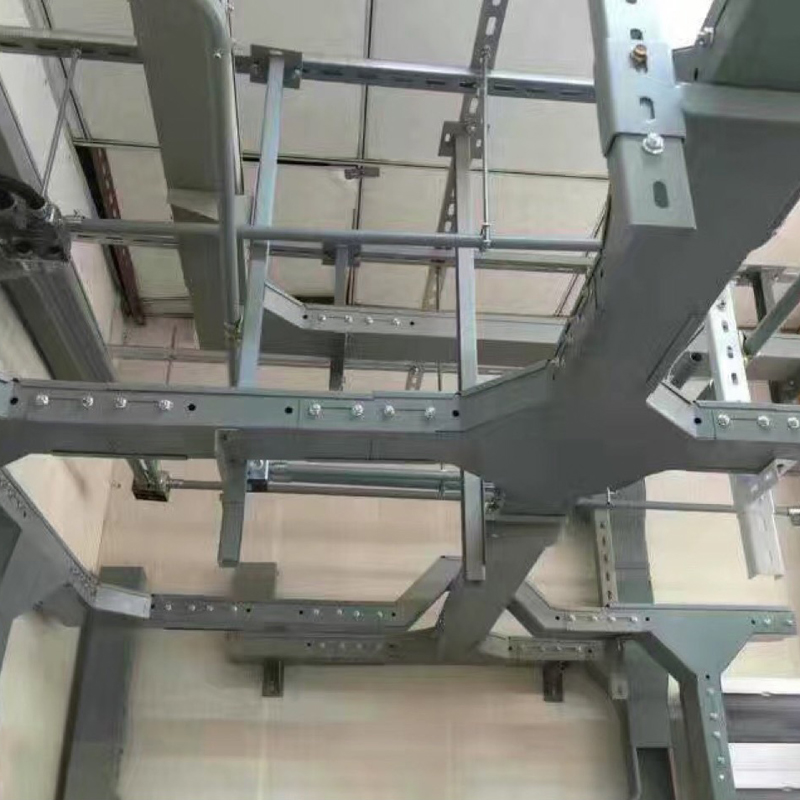
Cable trays are mostly divided into trough type, tray type, ladder type, grid type, large-span type, and tray type
Trough type bridge: Trough type bridge is a fully enclosed bridge. It is most suitable for planning control cables for computer cables, communication cables, thermocouple cables, and other high-sensitivity systems. It has good effects on shielding and protecting cables from interference and heavy corrosion environments.
Tray type bridge: Tray type bridge is the most widely used in petroleum, chemical, light industry, telecommunications and other fields. It has the advantages of light weight, large load capacity, beautiful appearance, simple structure, and convenient equipment. It is suitable for both power cable equipment and cable laying control.
Ladder style bridge: It has the advantages of light weight, low cost, unique design, convenient equipment, good heat dissipation, and good ventilation. It is suitable for laying cables with larger diameters and for laying high and low voltage power cables.
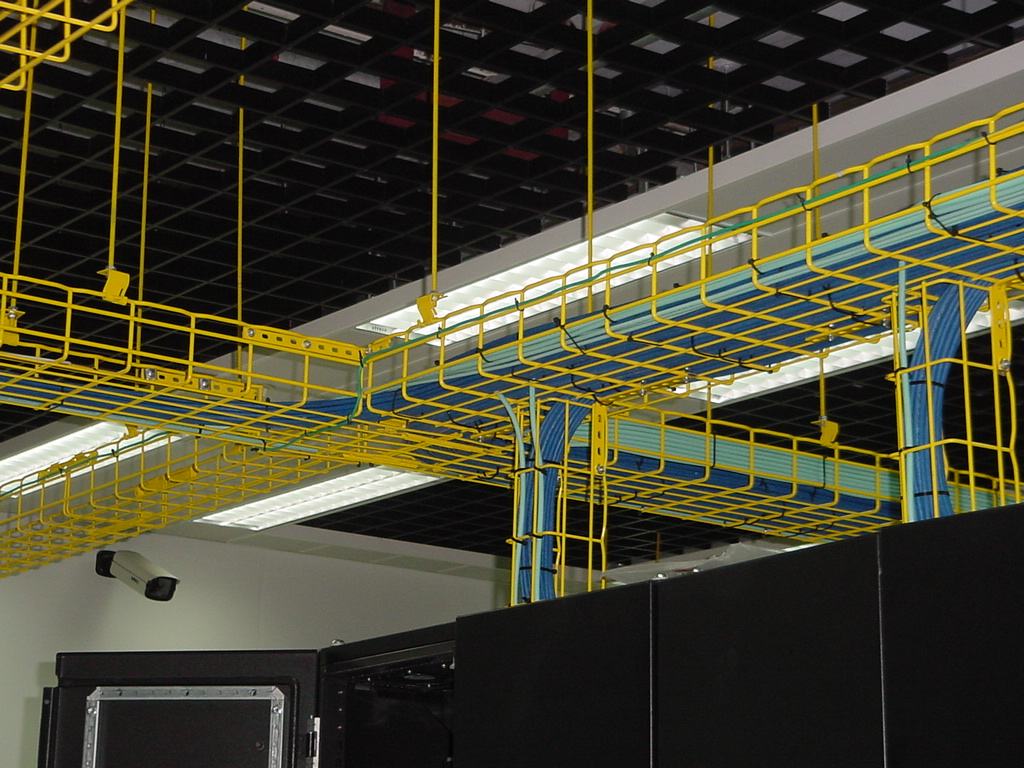
Grid cable tray: suitable for power and communication cable wiring (more common in network rooms).
Material of cable tray
The materials of cable trays generally includeStainless steel cable tray,FRP Cable Tray,Aluminum alloy cable tray,Hot Dip Galvanized Perforated Cable Tray.
Galvanized cable tray: Galvanized cable tray is also known as "hot-dip galvanized cable tray". Currently, traditional ordinary galvanized cable trays on the market are generally made directly from hot-dip galvanized sheets and are also commonly used in the market. It is generally referred to as "galvanized cable tray" and its cost is cheaper than other materials of cable trays, with high cost-effectiveness.
Hot dip galvanized cable tray: Currently, only a small number of cable tray accessories products use electroplating (cold galvanizing) technology. The hot-dip galvanized sheet and strip produced by steel plate factories are actually hot-dip galvanized. U-groove steel products are mostly hot-dip galvanized. Line pipes, cable trays, and support products are made of hot-dip galvanized sheet metal. For some projects with high anti-corrosion requirements, the products can also be hot-dip galvanized to a thickness of about 50 microns.
Fireproof cable tray: Fireproof cable tray is made of galvanized steel cable tray coated with steel structure fireproof coating on the inner and outer layers. From the perspective of fire protection, it refers to the constituent materials of fireproof cable tray, which have certain combustion performance and are usually made of flame-retardant or non combustible materials. It is mainly processed from high-quality cold-rolled steel plates and has the characteristics of high bearing capacity and long service life. The cross-section of the steel skeleton is neat, without burrs or sharp corners, the grooves are smooth and flat, and there are no sharp protrusions.
Spray painted cable tray: Spray painted cable tray is actually a surface treatment method that sprays "electrostatic plastic powder" on the surface of the cable tray. The original material is still galvanized sheet, but a layer of electrostatic spray coating is added to the surface to enhance its service life, corrosion resistance, and water resistance, oil resistance, and anti-static properties. The surface coating is smooth, and the coating color can be customized to meet the color design requirements of the construction project site.
Fiberglass cable tray: Fiberglass cable tray is suitable for laying power cables with voltage below 10 kV, as well as indoor and outdoor overhead cable trenches and tunnels such as control cables, lighting wiring, pneumatic and hydraulic conduit cables.
Fiberglass cable tray has the characteristics of wide application, high strength, light weight, reasonable structure, low cost, long service life, strong corrosion resistance, simple construction, flexible wiring, standard installation, and beautiful appearance. It brings convenience to technical transformation, cable expansion, maintenance and repair.
The composition structure of cable trays should meet the requirements of strength, stiffness, and stability, and should comply with the following regulations:
The bearing capacity of the bridge shall not exceed the value obtained by dividing the maximum load at which the bridge initially undergoes permanent deformation by a safety factor of 1.5;
The relative deflection value of ladder frames and trays under the allowable safe working load should not exceed 1/200 for steel structures; Aluminum alloy should not exceed 1/300;
The ratio of deflection to arm length of steel support arms under allowable load should not exceed 1/100;
The safety level circuit cable tray of nuclear power plants should meet the design requirements of seismic Category I items, and both operational safety seismic vibration and ultimate safety seismic vibration should be used for seismic design.
Installation height
Except for technical interlayers and special locations, the horizontal section of cable trays should not be less than 2.5 meters above the ground, and the vertical section should not be less than 1.8 meters above the ground. When the requirements cannot be met, measures should be taken to prevent mechanical damage, except inside and outside electrical rooms.
The selection of cable tray types should comply with the following regulations:
When it is necessary to shield external electrical interference, a metal tray without holes and a solid cover plate should be used;
In places with flammable dust, it is advisable to use ladder frames, and each floor of the bridge should be equipped with a solid cover plate;
For places that require protection against high temperatures, corrosive liquids or oil splashes, perforated trays should be selected, and solid cover plates should be installed on each layer of the bridge;
When assembling according to local conditions, modular pallets can be used;